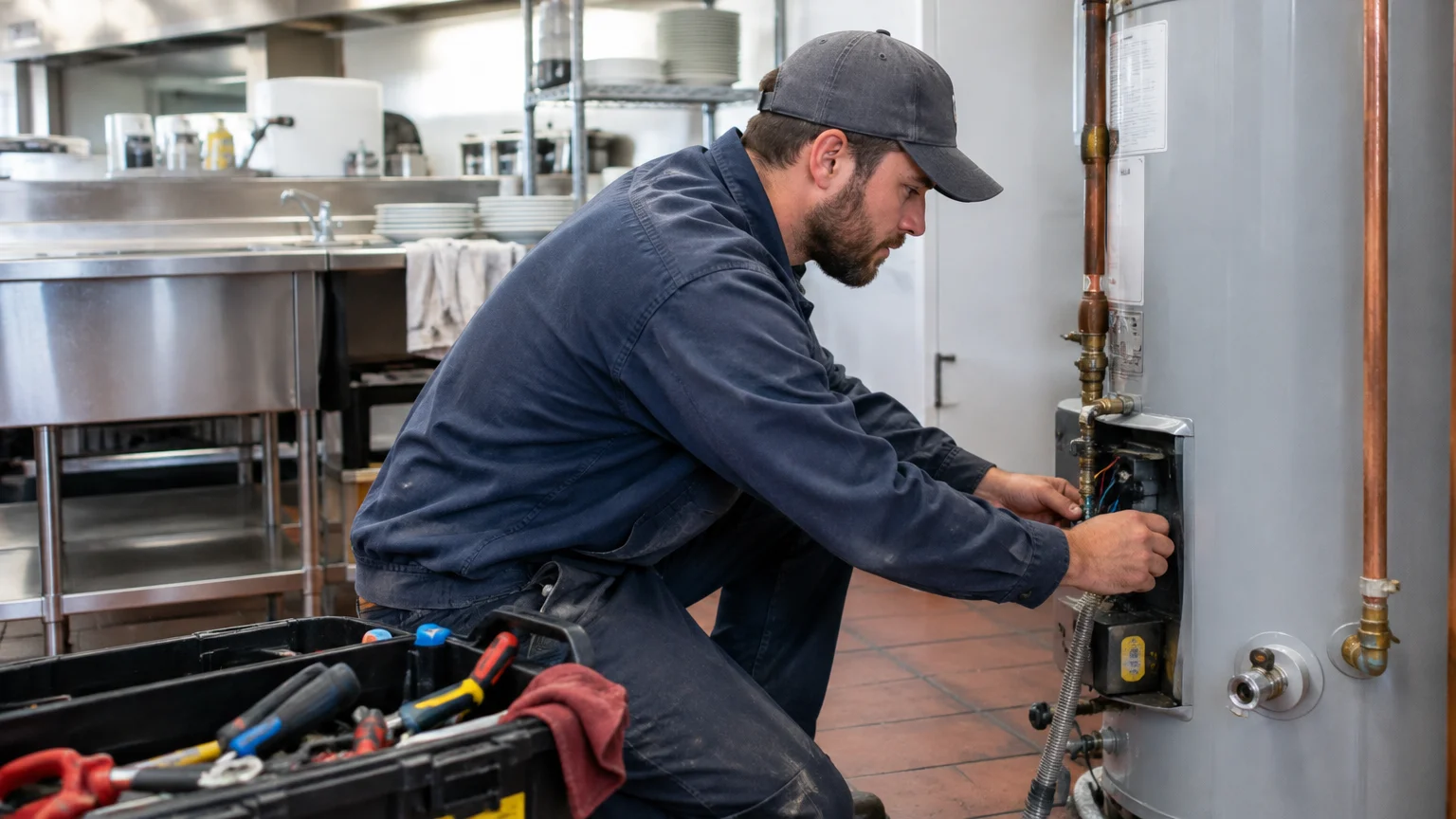
No hot water at a business can come from a failed heater, lost power, a fuel problem, a closed valve, or heavy demand. Safe visual checks may show where the trouble starts. Gas leaks, electrical faults, active leaks, and commercial equipment need prompt care from a qualified plumber.
Why is there no hot water at a business?
No hot water at a business often points to trouble with the water heater, its fuel supply, or the pipes that carry hot water. The unit may lose power, fail to ignite, trip a safety control, or have a broken heating part. A closed shutoff valve may also stop hot water from reaching sinks, showers, or kitchen fixtures.
Commercial water heaters work harder than most home units. Restaurants, offices, hotels, medical sites, schools, and stores may have many fixtures running at once. A busy morning can use all the water in a storage tank before it can heat more. An older or small unit may also struggle after a business adds staff, customers, restrooms, or equipment.
What water heater problems can cause a loss of hot water?
Common causes include a failed heating element, bad thermostat, faulty burner, blocked vent, failed ignition system, or damaged control board. Sediment can settle inside a tank and slow heat transfer. Rust can harm the tank, fittings, or anode rod. An anode rod is a metal part that helps protect the tank from rust.
Tankless systems can lose hot water when the flow sensor, heat exchanger, filter, or power supply fails. The unit may also shut down when several fixtures need more water than its rated flow. Tankless water heater installation should match the building’s busiest demand, fuel type, venting needs, and available power.
Could the problem be in the business plumbing?
Yes. A failed mixing valve, blocked pipe, broken recirculation pump, or crossed hot and cold connection can affect many fixtures. A mixing valve blends hot and cold water to control the water temperature. If it fails, water may stay cool even when the heater works.
One fixture may have its own problem, such as a worn cartridge or blocked aerator. If every sink and restroom has the same issue, the heater, main hot water pipe, controls, or recirculation system needs attention. Plumbing Orlando Florida helps businesses tell the difference between one fixture problem and a wider system failure.
What should you check when a commercial water heater stops working?
A business owner or manager can make a few safe visual checks before arranging service. First, find out if the issue affects one fixture or the whole building. Staff should also think about any recent power outage, building shutdown, renovation, or plumbing repair that may have changed the system.
Which checks are safe for staff to perform?
Staff may make these checks without removing covers or touching internal parts:
- See whether nearby hot water taps have the same problem.
- Look for a tripped breaker without opening the water heater.
- Check for an error message on a visible control.
- Look for water near the tank, valves, or floor.
- Make sure obvious shutoff valves have not been closed.
- Note odd sounds, smells, smoke, or changes in water color.
A business should not keep resetting a breaker or safety control. Staff should not remove electrical panels, change gas controls, relight equipment without clear maker instructions, or bypass a safety device. These actions can cause fire, shock, burns, or more equipment damage.
What should staff do if they smell gas?
If staff smell gas, they should leave the building and keep others away. They should not use switches, phones inside the building, flames, or devices that may create a spark. Once outside and safe, they should contact the gas utility or emergency services as local safety guidance directs. A qualified professional should inspect the system before normal use begins again.
A leak needs quick action even when there is no strong smell. Water can damage walls, floors, stock, equipment, and electrical systems. Leaks and Burst Pipes service may be needed when water escapes from supply lines or nearby plumbing instead of the heater itself.
When should a business repair or replace its water heater?
Repair may work when the tank is sound and the problem involves a replaceable part. Examples include a thermostat, heating element, ignition part, valve, sensor, anode rod, or control. Water heater repair can restore service when the unit has enough capacity and does not have major rust.
Replacement becomes more likely when the tank leaks, the unit has severe rust, parts are no longer made, or failures keep coming back. A business may also need a new system after changes in occupancy, work hours, restroom use, or production needs. The best choice depends on the unit’s condition, size, fuel, venting, controls, and expected demand.
When is water heater replacement a better choice?
Water heater replacement may make sense when the current unit cannot meet busy-time demand or has damage that may cause more downtime. A professional can compare a storage tank with a tankless system. Storage tanks keep heated water ready. Tankless systems heat water as it flows, but they still need the right size and proper power or fuel service.
A replacement plan should account for recovery time, fixtures used at once, space, venting, drainage, water pressure, and local code rules. Commercial sites may also need special controls, larger tanks, or a recirculation loop. Water Heater Installation should be handled by a qualified professional who can confirm safe connections and correct operation.
How can a business choose the right service provider?
A business should seek a plumbing company that works with commercial water heaters and understands restroom needs. The provider should explain the likely cause and point out any safety concerns. It should also explain whether repair or replacement makes sense for the building.
The business should receive a written quote before approved work begins. The quote should clearly describe the work, parts, and equipment. The final cost depends on the problem, parts, unit size, access, and needed work, and it is confirmed on a quote.
Local search results may show many plumbing businesses near me, but location alone does not prove commercial experience. A business should review licensing rules, insurance, service coverage, and experience with its heater type. In Orlando, property owners can plan the next step based on their building’s needs.
How can a business restore hot water and prevent repeat problems?
Professional service often starts with a full system check. The plumber may test power, fuel, controls, water temperature, pressure, valves, venting, tank condition, and connected fixtures. The diagnosis should also consider demand during busy times, not only the heater’s condition when the building is quiet.
A technician may repair a failed part, clear a safe blockage, replace a valve, restore a connection, or suggest a suitable new unit. If water damage is present, the business may need urgent plumbing help before heater work is complete. The main goal is safe diagnosis and the return of hot water.
What maintenance helps commercial restrooms and heaters?
A written maintenance plan can lower the chance of a sudden shutdown. It should follow the equipment maker’s instructions and match how the building is used. Staff can report changes early instead of waiting for a full failure.
Useful planning steps include:
- Check for damp areas, rust, drips, and odd sounds.
- Watch for slow recovery or changing water temperature.
- Keep space around the heater clear for safe service.
- Test restroom fixtures for leaks and poor shutoff action.
- Arrange professional checks for controls, valves, and connections.
- Record repairs, error codes, shutdowns, and demand changes.
Simple upkeep is safe for staff when it only involves looking and reporting. Internal repairs, gas work, electrical work, venting, pressure concerns, and tank replacement should be left to a qualified professional. The same rule applies to a water heater that serves many restrooms or key business operations.
Key takeaways
- A failed heater is only one possible cause of lost hot water.
- Heavy demand can reveal a sizing or recovery problem.
- Staff should make visual checks but avoid opening equipment.
- Gas smells, active leaks, and electrical faults need urgent care.
- Repair or replacement depends on safety, condition, capacity, and reliability.
Frequently Asked Questions
How do you check for gas leaks near a water heater?
Staff should not test a suspected gas leak with a flame or electrical device. If gas is smelled, everyone should leave the building and avoid creating sparks. From a safe location, contact the gas utility or emergency services as directed. A qualified plumber or gas professional should inspect and approve the system before use.
Can a running toilet cause a business to lose hot water?
A running toilet does not usually stop a water heater from making hot water. It can waste water and add demand to the building’s plumbing. A blocked pipe, failed mixing valve, or pressure problem may affect both restrooms and hot water. The causes should be checked separately, and drains or drain cleaning may need attention if flow problems are also present.
Is tankless water heater installation right for a business?
Tankless water heater installation may suit a business with the right demand pattern, power or gas supply, venting, and space. It does not always solve low hot water capacity. A professional must size the system for peak flow and check whether several fixtures may run at the same time.
Should a business call a plumber for water heater repair?
A business should call a plumber for water heater repair when the unit serves several fixtures, stops working repeatedly, leaks, shows an error, or involves gas or electrical parts. Staff can report symptoms and make safe visual checks. They should not remove panels, bypass controls, or attempt internal repairs.
Conclusion
No hot water at a business may result from a control issue, heavy demand, a plumbing fault, or a failing commercial heater. Safe checks can help narrow the problem, but trained diagnosis matters when the system involves gas, electricity, leaks, pressure, or many restrooms. In Orlando, Contact us to arrange professional help from Plumbing Orlando Florida.
If you are not sure what you are dealing with, it is worth having someone look at it before it turns into a bigger job. Get in touch with Plumbing Orlando Florida in Orlando, Florida today and we will tell you where you stand.