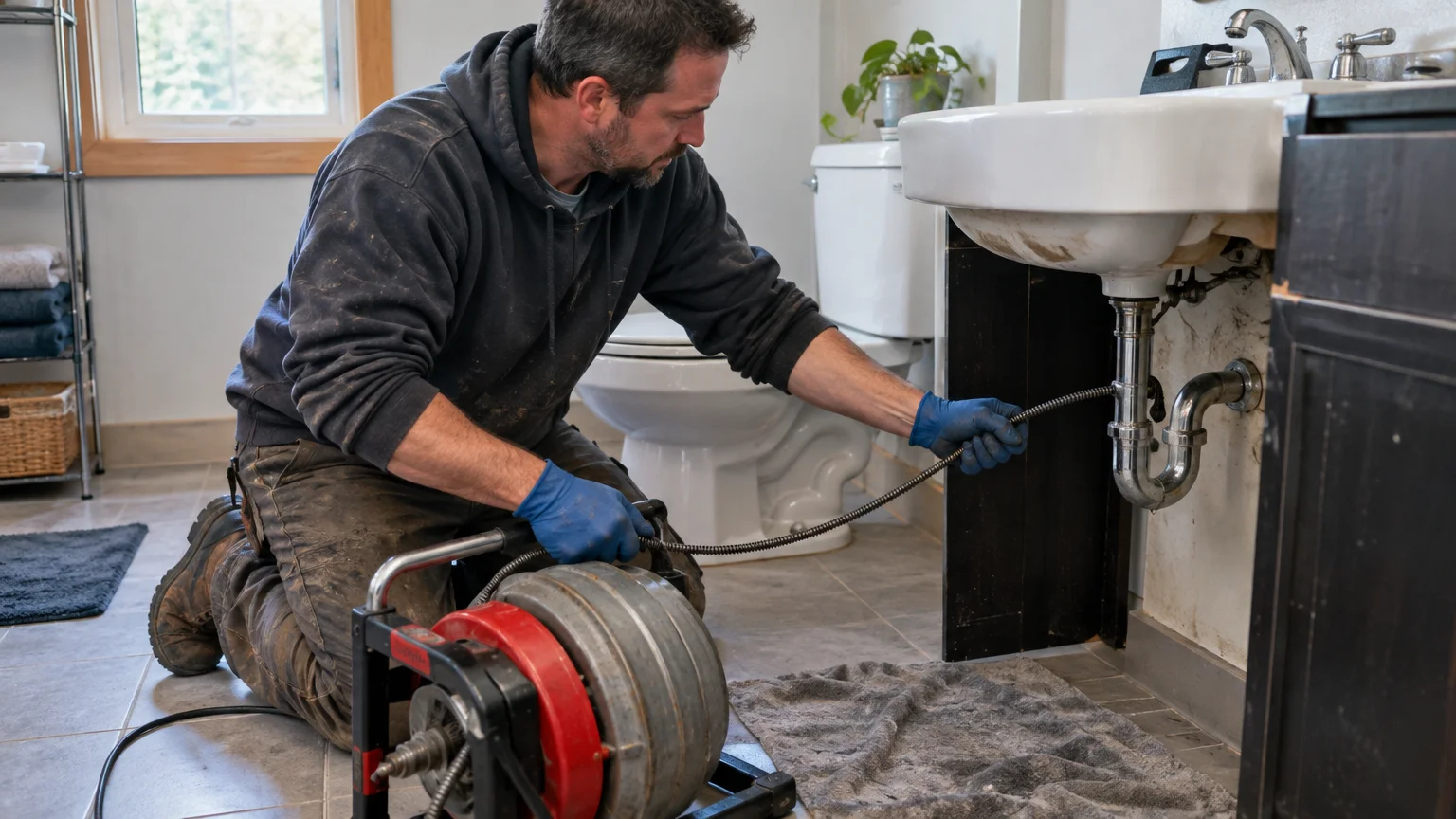
Learning how to use a plumbing snake can clear a small clog in one sink, tub, or shower. Choose a tool made for the fixture, protect the work area, and feed the cable slowly. Stop if the cable will not move, several drains back up, or water leaks. Those signs need a licensed plumber.
What is a plumbing snake and when should you use one?
A plumbing snake is a flexible cable that reaches inside a drainpipe. It can break up or pull out a clog that a plunger cannot clear. A hand snake often works for a small blockage close to a sink, tub, or shower drain.
You do not need a professional for every slow drain. You can safely remove hair from a stopper, clean a sink strainer, and check for simple buildup. These steps often help when one fixture drains slowly and there is no leak or water damage.
Use a snake when a plunger has failed and water still drains slowly. Soap, hair, and soft buildup may respond well to gentle snaking. A regular cable is not a good first tool for a toilet. It can scratch the bowl or harm the trap. Use a toilet auger made for that fixture instead.
Which type of drain snake is right for the blockage?
A small hand auger works well for bathroom sinks, tubs, and showers. A toilet auger has a protective bend that guides it through the toilet trap. A longer cable may reach farther into a branch drain, but extra length can tangle or harm the pipe.
Match the tool to the fixture and likely clog. Never force a thin cable through a hard object. If several fixtures drain slowly, the blockage may be farther down the line. In that case, Drain Cleaning from a trained plumber is safer than repeated home attempts.
What safety precautions should you take before snaking a drain?
Keep the work area dry and clear before placing the cable inside. Wear gloves and eye protection to guard against dirty water. Keep a bucket, towels, and a small container nearby for water and removed waste.
Never use a plumbing snake after pouring chemical drain cleaner into the pipe. The chemical can remain in the water and cause serious burns. Keep your hands away from the cable opening while it turns. Stop work if water backs up from more than one fixture.
How do you use a plumbing snake correctly?
The basic process is simple. Open the drain, place the cable inside, turn it slowly, and pull back or break apart the clog. Use steady pressure, not force. Rushing may bend the cable, scratch the fixture, or push the clog deeper.
Remove the drain stopper, screen, or strainer first. For a sink, check the trap below the basin. A trap is the curved pipe that holds water and blocks sewer gases. Cleaning the trap may solve the problem without snaking the deeper drain.
How do you feed and rotate the cable?
- Place a bucket below the trap or drain opening, then remove standing water.
- Insert the snake several inches without forcing it into the pipe.
- Turn the handle clockwise while feeding the cable slowly.
- Pause when you feel resistance, then turn the cable gently against the clog.
- Pull the cable back a short distance, then push forward again.
- Repeat until the cable moves more freely through the pipe.
The handle should turn smoothly. If it locks, the cable may have reached a hard object or pipe bend. Pull it back slightly to release it. Do not use a drill with a basic hand snake unless the maker allows it. Extra speed can harm older pipes.
How do you remove the clog without damaging the pipe?
When the cable catches material, pull it out slowly. The clog may contain hair, food, grease, or other waste. Clean the cable after each pass. Several gentle passes are safer than one hard push.
Do not force the cable through a fixed object. Tree roots, broken pipe pieces, and heavy scale need other tools and a closer check. Old, weak, or damaged pipes also need care before more pressure is used. Plumbing Orlando Florida can help property owners in Orlando choose a safer next step when a simple snake fails.
What should you do after using a plumbing snake?
Flush the drain with warm water after the clog seems clear. The flow should improve without gurgling, rising water, or a sewer smell. Clean the drain opening, stopper, and trap before putting them back.
Warm tap water can rinse soft soap and grease from some household drains. Boiling water may harm some pipes, seals, or fixtures. Follow the fixture maker’s advice and never mix cleaners. Regular screen cleaning is a safer way to care for drains.
How do you flush and test the drain?
Run water for a short time and check below the sink for leaks. Fill a sink partway, then release the water to test the flow. For a tub or shower, use a small amount of water. The drain should clear without backup or slow pooling.
Check the trap and nearby joints after the work. A loose connection can leak even when water flows well. If water appears under the fixture, stop using it and check the connection. Ongoing leaks need professional plumbing repair, especially near cabinets, walls, or electrical items.
Why can a drain clog return after snaking?
Snaking may open only a narrow path through the clog. Grease, hair, scale, and soap can stay on the pipe walls. A returning clog may also point to a sagging pipe, root growth, poor slope, or damaged sewer line.
The pattern can show where the problem is. One fixture that slows again may have a local clog. Several fixtures backing up together suggest a deeper drain or sewer issue. Plumbing Orlando Florida serves Orlando neighborhoods such as Downtown, College Park, Winter Park, Baldwin Park, Conway, and MetroWest. The team helps with blocked drains and other home or business plumbing problems.
When should you stop using a plumbing snake and call a plumber?
Stop when the cable will not move, comes back damaged, or does not improve the drain. You also need help when wastewater backs up, several fixtures are affected, or the clog returns soon after cleaning. These signs may point to a deep blockage or damaged pipe.
Emergency Plumbing may be needed when sewage enters the property, a pipe bursts, or water damage spreads. A gas smell is a separate emergency. Leave the area, avoid flames and switches, and contact the gas utility or emergency services as needed. Never use a drain snake to test or fix a gas line.
Which warning signs point to a deeper drain or sewer problem?
The following signs need prompt attention:
- Several sinks, tubs, or toilets drain slowly at the same time.
- Wastewater rises from a floor drain when another fixture runs.
- The drain keeps making gurgling sounds after cleaning.
- A sewer smell remains after the trap has been cleaned.
- The blockage returns after careful snaking and flushing.
- Wet ground or unusual green growth appears near a buried sewer line.
A licensed plumber can inspect the line and find the blockage. The repair may involve drain cleaning, a camera check, pipe repair, or sewer line work. Plumbing costs depend on the pipe condition, access, damage, and urgency. The final cost should be confirmed on a quote.
How can you prevent future blocked drains?
Drain screens catch hair and food before they enter the pipe. Keep grease, cooking oil, wipes, paper towels, and paint out of household drains. Toilets should receive only waste and toilet paper. These habits help protect homes, rentals, offices, and other properties in Orlando.
Respond to slow flow early instead of waiting for a full backup. Routine cleaning may help a busy commercial drain, but the right schedule depends on use and pipe condition. Plumbing Orlando Florida can explain when professional Drain Cleaning is safer than another home attempt.
Frequently Asked Questions
Can a plumbing snake clear every blocked drain?
No. A snake may clear a small, soft clog near one fixture, but it cannot fix every pipe problem. Roots, broken pipes, heavy scale, and deep sewer blockages need other methods. If several fixtures back up or the clog returns, a licensed plumber should inspect the drain.
Should a homeowner use a plumbing snake or a plunger first?
A plunger is usually the safer first tool for a simple fixture clog. It uses pressure without sending a cable into the pipe. If plunging does not restore flow, a properly sized snake may help. Stop if the cable meets hard resistance or causes damage.
Can a plumbing snake damage a pipe?
Yes. Careless use can scratch fixtures, bend the cable, loosen joints, or harm weak pipes. Force and high speed raise the risk. Use a tool made for the fixture and work slowly. Older, fragile, or damaged pipes need professional care before snaking.
Why does a drain clog keep coming back?
A recurring clog may mean that only a small path was opened. Grease, hair, scale, roots, poor pipe slope, or a damaged sewer line can keep causing trouble. Repeated cleaning may delay the right repair. A plumber can check the line and suggest a lasting solution.
Key takeaways
- A plumbing snake works best on a small clog affecting one fixture.
- The cable should move slowly with gentle pressure and steady rotation.
- Chemical drain cleaner and a plumbing snake should never be used together.
- Several slow fixtures or repeated backups may signal a sewer problem.
- Early professional help can limit water and pipe damage.
Conclusion
Learning how to use a plumbing snake can help clear some simple drain clogs. The tool cannot fix damaged pipes, root growth, or deep sewer blockages. Careful use, clean drain habits, and early attention can protect a plumbing system.
Contact us to arrange help from Plumbing Orlando Florida when a blocked drain will not clear, returns after snaking, or affects more than one fixture.