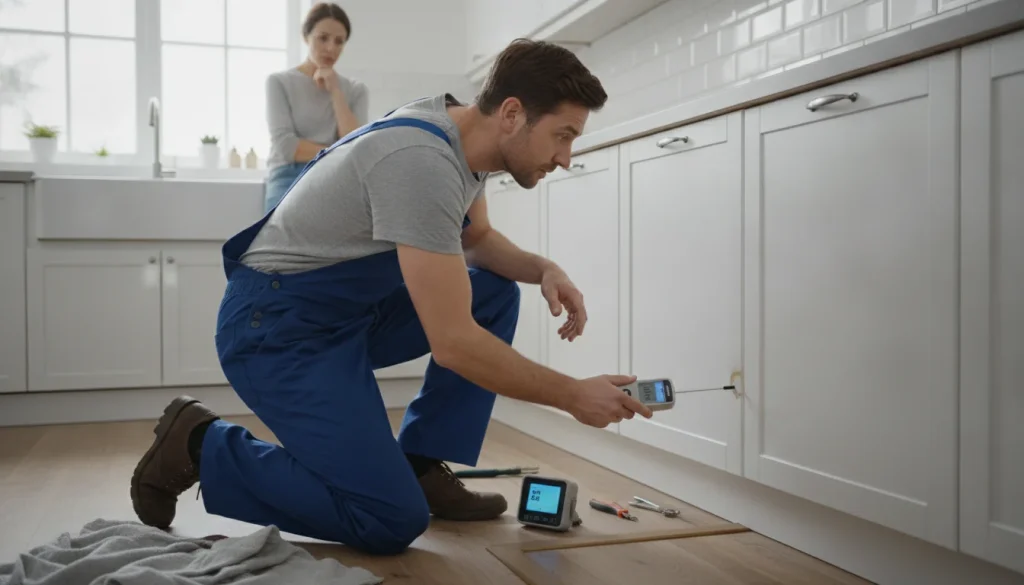
Overview: Burst pipe or hidden leak?
It happens fast—a hiss in the wall, a spreading wet patch. Is it a burst pipe or hidden leak? Here’s the short answer: a burst pipe dumps a lot of water at once, causes a sharp pressure drop, and often makes noise. A hidden leak seeps slowly, leaves damp or musty areas, and pressure loss is mild or intermittent.
In Orlando, Florida, occasional cold snaps, aging plumbing, and high water pressure can set off either issue. This guide outlines reliable signs, simple confirmation tests, and immediate safety steps to help you act quickly. It also shows how Plumbing Orlando Florida responds to urgent calls and completes repairs so you can limit damage and disruption.
Quick diagnosis: signs of a burst pipe or hidden leak
A burst pipe is a sudden failure in the pipe wall that releases water rapidly, crashes system pressure, and may create banging, rattling, or a rushing sound. A hidden leak usually stems from a pinhole, hairline crack, or loose joint; water escapes slowly and often stays out of sight in walls, ceilings, or under floors.
Watch how the water behaves. If faucets spit air, then only trickle, the whole-home pressure likely plunged from a major break. If flow seems normal but you spot damp drywall, a growing ceiling stain, or a musty smell, that suggests a small, ongoing leak.
Look for visual patterns. A burst can flood rooms, bulge ceilings, or send water through light fixtures. A hidden leak tends to leave paint blisters, warped trim, or a slowly widening moisture ring.
Run two simple tests. The water meter test checks for unseen flow: turn off all fixtures and appliances and watch the meter for 15 minutes—any movement points to a leak. The shutoff isolation test helps locate the zone: close the main shutoff valve at the home. If the meter still moves, the leak is on the supply line before the valve.
Use location and seasonal clues. Wet spots near exterior walls after a freeze often mean a split pipe. Damp carpet by an interior wall may indicate a slab leak beneath the floor. Attic drips can be roof or pipe related; on hot days, watch for pipe sweating that can mimic a small leak.
Immediate steps to limit damage and stay safe
Act quickly—small moves now can protect drywall, flooring, and wiring.
-
Shut off the main water. Turn the main shutoff valve clockwise to stop water to the building. If it won’t turn, use the curb or street valve with proper tools only if it’s safe to do so.
-
Kill power near water. Do not use electrical devices on wet floors. Switch off breakers serving soaked areas and keep people and pets away from standing water.
-
Open a low faucet. Relieve pressure and drain lines; this can slow the leak until a pro arrives.
-
Contain and document. Move belongings, place buckets and towels, and photograph damage and water paths for records.
-
Control moisture. If safe, run fans and a dehumidifier, lift small rugs, and ventilate damp rooms to reduce mold risk.
-
Avoid risky fixes. Do not use open flames to warm frozen pipes, and do not tape or glue a pressurized line. Wait until pressure is relieved.
-
Protect drains. If the sewer backs up, stop using fixtures; additional use can push wastewater into living spaces.
How pros find and fix the problem
Licensed plumbers pair experience with specialized tools to pinpoint leaks efficiently.
Leak detection methods
Acoustic leak detection uses sensitive microphones to hear escaping water through floors and walls. Thermal imaging maps temperature differences that reveal moisture behind finishes. Tracer gas—a light, safe gas mixture—can escape through tiny faults; sensitive detectors identify its path at the surface.
Technicians may perform pressure testing to see if an isolated section loses pressure. Valves separate zones so the exact run can be checked without opening every wall or slab, saving time and avoiding unnecessary damage.
Common repair options
Repairs depend on pipe type and access. Small splits may take repair clamps. Damaged sections are replaced with couplings or short re-pipe runs. Worn valves are swapped to improve shutoff control. If the source is a water heater or fixture supply, the fix targets those components rather than the main piping.
Plumbing Orlando Florida works across Orlando, Florida every week on Emergency Plumbing and Leaks & Burst Pipes calls. Crews stock parts for common copper, PEX, and PVC repairs and can advise on prevention once the system is dry and safe.
4. When to seek 24/7 emergency plumbing and what to expect
Round-the-clock help is appropriate when water will not stop, ceilings sag, the main supply line leaks, or the leak is near electrical systems. Slow damp spots can sometimes wait briefly if contained, but do not delay if staining spreads or the meter keeps moving.
Provide clear details to the dispatcher to speed service: where water appears, when it started, floors involved, whether power is off, and if the main valve is stuck. Share the pipe material if known; photos help plan access and parts.
On arrival, expect shutoff control, rapid diagnostics, and either a stable repair or a safe bypass. In the U.S., costs vary by pipe material, access complexity, after-hours timing, and any drywall or slab opening needed. Dry-out, cleanup, and mold remediation add time and may be scheduled separately.
Prevention steps
Prevention starts immediately after repairs. A pressure-reducing valve (PRV) regulates typical home water pressure to about 50–60 psi to reduce stress on lines. Insulate exposed piping, drain outdoor hose bibs before freezes, and consider smart leak sensors with auto-shutoff valves to limit future damage.
Frequently Asked Questions
### ### ### ### What should I do first if a pipe bursts at night?
Shut off the main water valve, then switch off power to wet areas. Open a low faucet to relieve pressure. Move valuables, place buckets, and document the damage with photos. An emergency plumber can provide a rapid response and clear next steps.
### ### ### ### How can I tell if a leak is under the slab?
Watch for warm or damp flooring, higher water bills, and the sound of running water when fixtures are off. Do a 15-minute meter test. If there is movement with all valves closed, a slab leak is likely and needs professional detection.
### ### ### ### Will my water heater cause the same signs as a burst pipe?
Not usually. Water heater leaks are often slow and pool at the base; you might see rust trails or hear a hiss at the tank. A burst pipe releases water quickly and drops pressure throughout the home. Check the heater’s drain pan and shutoff valve first.
Key takeaways
- A sudden flood and sharp pressure drop indicate a burst pipe; slow damp spots point to a hidden leak.
- Shut water, cut power to wet areas, vent rooms, and document damage to limit harm.
- Pros use acoustic, thermal, tracer gas, and pressure tests to locate leaks precisely.
- Repairs range from clamps and couplings to short re-pipe sections, depending on access and pipe type.
- Prevention includes a PRV set around 50–60 psi, pipe insulation, and smart leak detection with auto-shutoff.
Conclusion
From fast diagnosis to durable repair, Plumbing Orlando Florida serves homes and businesses. If you need help in Orlando, Florida with a burst pipe or hidden leak, the team can guide you step by step. Contact us.