Restaurant drain clogs often start with grease, food scraps, soap, and dirt entering kitchen pipes. Daily waste control, drain screens, proper oil storage, and planned commercial drain cleaning can lower the risk. Slow flow, bad smells, gurgling, and backups may show that a deeper drain or sewer issue is forming.
Table of Contents
- Why do restaurant drains keep clogging?
- What causes grease to harden inside commercial drain lines?
- Which restaurant drains are most likely to become blocked?
- What are the warning signs of a restaurant drain problem?
- How can restaurants prevent recurring drain clogs?
- How often should commercial restaurant drains be cleaned?
- When should a restaurant call a licensed commercial plumber?
- Frequently Asked Questions
- Key takeaways
- Conclusion
Why do restaurant drains keep clogging?
Restaurant drains keep clogging because commercial kitchens send more waste through pipes than most homes. Grease, food scraps, starch, soap, and dirt can stick to pipe walls. In time, the open space gets smaller, water slows down, and a full blockage can follow.
How grease, food waste, and debris build up
Small scraps can pass through a sink during a busy shift. Rice, pasta, flour, coffee grounds, vegetables, and meat waste may settle in pipe bends. Grease then coats these scraps and holds them together. This forms a thick mass that water cannot move well.
A drain screen catches larger scraps before they enter the pipe. Staff should scrape plates into trash or approved food-waste bins. Sinks should not be used to wash large amounts of food away.
Why high-volume kitchen work increases blockage risk
A restaurant may use several sinks, dishwashers, floor drains, and prep stations all day. Every fixture sends water and waste into the drainage system. A pipe that works well in the morning may struggle after hours of heavy use.
Old pipes, poor pipe slope, broken joints, and shared sewer lines can add to the problem. Plumbing Orlando Florida can help Orlando restaurant owners find the likely source instead of treating only the visible symptom. Drain cleaning may clear buildup, but repeat clogs often need a wider check.
What causes grease to harden inside commercial drain lines?
Grease hardens when fats, oils, and grease cool inside a drain line. This material is often called FOG. It may stay liquid near a hot sink, then stick to colder pipe walls farther away. More waste can attach to that layer until the line becomes narrow.
How fats, oils, and grease affect pipes
FOG includes cooking oil, meat fat, butter, sauces, and oily food scraps. It coats the inside of pipes and leaves less room for water to pass. Grease can also gather in traps, bends, and low spots.
A grease interceptor separates grease from wastewater. It still needs proper use and regular care. A dirty, blocked, or badly sized interceptor may let more grease reach the main drain system.
Why hot water does not remove grease forever
Hot water may move soft grease a short distance, but it does not remove grease from the whole system. When the water cools, the grease can stick to another part of the pipe. Repeated flushing may only move the problem farther downstream.
Dish soap may break up some surface residue, but it is not a full drain treatment. Restaurants should collect used oil and grease in approved containers. Staff should never pour cooking oil, sauces, or thick food waste into sinks.
Chemical drain products can harm pipes, workers, and treatment systems when used without proper guidance. They may also hide a larger problem for a short time.
Which restaurant drains are most likely to become blocked?
Kitchen sinks, floor drains, dishwashing areas, and main sewer lines face the greatest blockage risk. Each area receives different waste, but all can suffer when food, grease, or dirt enters the wrong drain.
Kitchen sinks, floor drains, and dishwashing areas
Three-compartment sinks and prep sinks often collect food particles and grease. Dishwashing areas may receive detergent, starch, and loose scraps. Floor drains can collect mop water, dirt, broken food pieces, and grease from spills.
A floor drain often has a trap that holds water and blocks sewer gases. If the trap becomes dirty or dry, odors may enter the building. Staff can remove visible debris from a drain cover and clean the area safely. They should not reach into a deep drain or use harsh chemicals without instructions.
Main sewer lines and shared commercial plumbing
A blockage beyond one fixture may affect several sinks or floor drains. This can point to a branch line or main sewer line problem. Shared commercial plumbing may also carry waste from more than one tenant or food service area.
When several fixtures drain slowly at once, the cause is less likely to be one small sink clog. A sewer backup Plumber may need to inspect the line with professional tools. Sewer line repair may be needed for roots, broken pipe sections, crushed lines, or heavy deposits.
What are the warning signs of a restaurant drain problem?
Warning signs include slow drainage, bad odors, gurgling, standing water, and repeat backups. Staff should record and report these signs early. Quick action can limit water damage and reduce service interruptions.
Slow drainage, odors, gurgling, and recurring backups
A slow sink may have buildup near the trap or farther along the branch line. A foul smell may come from food, grease, a dry trap, or sewer gas. Gurgling can happen when air moves through a partly blocked pipe.
Staff should note which fixture has the problem and when it occurs. A clog that appears only during busy service may show that the pipe has limited capacity. A backup that returns after basic cleaning suggests that waste remains in the line or that the pipe has a deeper defect.
When a small blockage may point to a sewer issue
One slow sink does not always mean a main sewer problem. However, several affected fixtures, wastewater on the floor, or sewage from a floor drain needs prompt attention. These signs may mean the blockage is downstream from individual fixtures.
Businesses should stop using affected fixtures when wastewater rises. Keep workers and customers away from contaminated water. Do not mix drain chemicals or enter a confined space to inspect a sewer line. Emergency Drain Cleaning may be needed when a backup threatens health, equipment, or business operations.
How can restaurants prevent recurring drain clogs?
Restaurants can prevent many repeat clogs through staff training, waste control, drain screens, and planned maintenance. Prevention works best as part of daily closing duties. It should not begin only after a backup.
Daily kitchen practices and staff procedures
A simple routine can reduce the waste entering the plumbing system. Managers should train every shift and check that the steps are followed during busy periods.
- Scrape plates and pans into the correct waste bin before washing them.
- Wipe oily cookware with an approved absorbent material before rinsing.
- Keep drain screens in place and empty them into trash often.
- Store used cooking oil in approved containers for proper collection.
- Clean sink basins, strainers, and floor drain covers after each shift.
- Record slow drains, odors, backups, and repeat problem areas.
These tasks are safe for trained staff because they involve cleaning and waste handling. They do not replace professional work on a blocked main line, damaged pipe, grease interceptor, or contaminated backup.
Drain screens, grease interceptors, and proper waste disposal
Drain screens catch larger material before it reaches the pipe. Grease interceptors separate grease from wastewater, but they still need correct use and regular care. Their size, design, condition, and cleaning needs depend on the property and local rules.
Managers should follow the equipment maker’s directions and local requirements. Staff should not remove a screen during busy service just to make water drain faster. That choice may send waste into a harder-to-reach part of the system.
How often should commercial restaurant drains be cleaned?
Commercial restaurant drains should be cleaned based on use, waste levels, pipe condition, and past blockage history. There is no one schedule for every kitchen. A busy restaurant with frequent grease issues may need more service than a low-volume food business.
Factors that shape a cleaning schedule
A plumber may review the number of meals served, the type of cooking, the amount of grease used, the age of the pipes, and the drainage layout. The condition of traps, grease interceptors, and sewer connections also matters.
A useful maintenance record should list the date of each cleaning, the affected fixture, the waste found, and whether flow improved. If the same line blocks again soon after cleaning, the record can help reveal a deeper cause.
Why planned maintenance differs from emergency clearing
Emergency clearing focuses on restoring flow after a blockage. Preventive maintenance removes buildup before it stops normal work. A planned visit allows safer work, better scheduling, and a closer review of the drainage system.
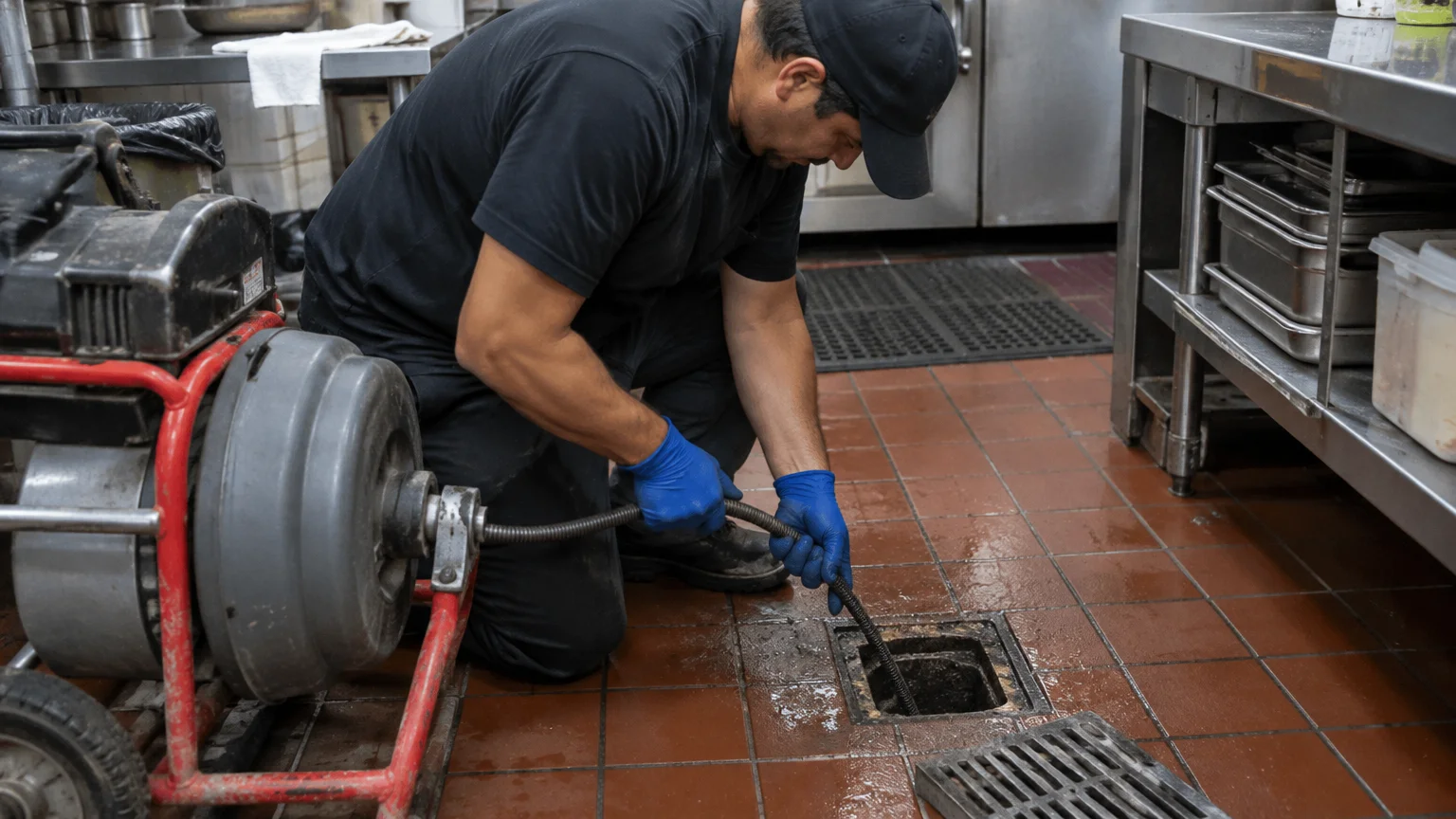
Equipment should match the pipe, access point, and blockage. A plumber may use a drain snake for a local obstruction or water-jetting equipment for suitable heavy buildup. The right method depends on the line and its condition. A snake may open a path without removing every layer of grease.
When should a restaurant call a licensed commercial plumber?
A restaurant should call a licensed commercial plumber when drains keep blocking, several fixtures are affected, wastewater backs up, or staff cannot clear the issue safely. Professional help is also needed when a pipe, sewer line, grease interceptor, or drain connection may be damaged.
Situations that need professional inspection or repair
Call for help when a blockage returns after basic cleaning, sewage enters the building, or a drain problem affects food preparation areas. A plumber should also check unexplained odors, repeated gurgling, sudden loss of flow, and water around cleanouts or floor drains.
Home remedies such as cleaning drain vinegar baking soda may help with light residue in some home drains. They are not reliable for commercial grease buildup. Baking soda and vinegar should not be mixed with chemical drain cleaners. Staff should avoid testing products when a blockage affects several fixtures.
What to expect during commercial drain service
A plumber will ask about symptoms, affected fixtures, recent backups, and past cleaning. The inspection may include traps, access points, branch lines, cleanouts, and the main sewer connection. A camera or other tool may be used when the blockage location is unclear.
The work depends on what the inspection finds. A local clog may need clearing, while heavy grease, broken pipe sections, or a sewer defect may need more repair. The final cost depends on parts, access, line size, damage, and urgency. It is confirmed on a quote before approved work begins.
Plumbing Orlando Florida provides plumbing support for commercial properties in and near Orlando. Service areas include Downtown, College Park, Winter Park, Baldwin Park, Conway, MetroWest, and nearby parts of the city. Building age, local conditions, and the property layout can affect the best next step.
Frequently Asked Questions
Can hot water prevent restaurant drain clogs?
Hot water may move soft residue for a short time, but it does not remove grease from the full drain line. As water cools, grease can harden again on pipe walls. Restaurants should control waste at the source, use screens, manage used oil, and plan suitable drain cleaning.
Is drain cleaning enzyme safe for commercial kitchens?
Drain cleaning enzymes may break down some organic material, but they do not solve every blockage. Use must match the product directions, pipe materials, local rules, and site needs. Enzymes cannot repair damaged pipes or remove a severe grease blockage without proper inspection.
What should staff do during a sewer backup?
Staff should stop using affected fixtures and keep people away from contaminated water. Isolate the area until it can be cleaned safely. Workers should not mix chemicals or enter a drain, pit, or confined space. A licensed plumber should inspect the cause before normal use starts again.
Can a restaurant clear a small drain clog without a plumber?
Staff can remove visible debris, clean a drain screen, and wipe grease from reachable surfaces. They should not dismantle deep pipework, use harsh chemicals, or work on a main sewer line. A licensed plumber is needed when the clog returns, affects several fixtures, or creates a health risk.
What causes drain odors after cleaning?
Odors may come from trapped food, grease left inside the line, a dry trap, poor venting, or a sewer connection problem. Cleaning the visible drain cover may not remove the source. Repeat smells should be inspected, especially when they occur with slow flow or gurgling.
Key takeaways
- Grease and food waste are common causes of commercial drain clogs.
- Hot water may move grease but does not remove it for good.
- Screens, waste controls, and staff training help prevent buildup.
- Several slow fixtures or a sewer backup may signal a main line issue.
- Repeat clogs need professional inspection, not repeated chemical treatment.
Conclusion
Restaurant drain clogs can interrupt service, damage property, and create unsafe conditions. Daily waste control is the first defense. Planned drain cleaning helps manage buildup before it becomes an emergency.
When symptoms return or several drains are affected, professional inspection can find the cause. Plumbing Orlando Florida helps restaurant owners protect kitchen flow and limit repeat drainage problems in Orlando.
If you are not sure what you are dealing with, it is worth having someone look at it before it turns into a bigger job. Get in touch with Plumbing Orlando Florida in Orlando, Florida today and we will tell you where you stand.