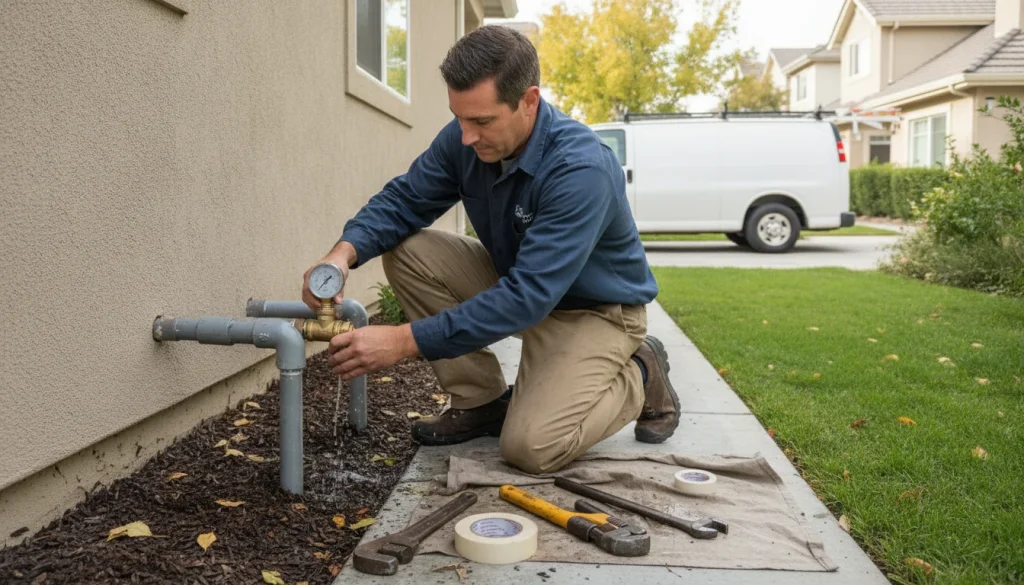
Do faucets hiss or bang when you turn them on? Do toilet fill valves chatter or your water heater pop? These are classic signs of water pressure too high. In plain terms, “high” means static pressure above 80 psi (with all taps off), which strains pipes, valves, and appliances. If the problem seems new in your Orlando, Florida home, act early to limit wear and avoid leaks.
Key Takeaways
- “High” pressure means 80+ psi static; normal is 40–60 psi.
- Confirm with a screw-on pressure gauge and check the overnight peak.
- Usual culprits: PRV issues, thermal expansion, municipal surges, or well settings.
- Safe fixes: adjust/replace PRV, charge/replace expansion tank, add gauges.
- Call a pro for 80+ psi, TPR discharge, banging pipes, or recurring leaks.
1. What “high” water pressure means and how to confirm it
In most US homes, normal pressure is 40–60 psi (pounds per square inch). The maximum allowed by code is 80 psi for static pressure, which is the reading with no water running. Anything above 80 psi is considered high and unsafe for your plumbing system.
A pressure gauge is a small tool that screws onto a hose bib or laundry tap and shows live pressure. To check:
- Pick a cold outdoor spigot or the laundry tap. Screw on the gauge hand-tight.
- Make sure no water is running inside. Read the static psi.
- Open a faucet indoors. Watch the gauge for drops and spikes.
- Leave the gauge on overnight. Many gauges have a red needle that records the peak; check it in the morning to spot spikes.
If static pressure stays near 80 psi or the peak needle shows overnight spikes above that, the system needs attention. When readings exceed 80 psi, that’s water pressure too high for your plumbing. Short surges can occur in parts of Orlando, Florida, but repeated spikes stress pipes, valves, and appliances.
2. Common causes of high water pressure
A pressure-reducing valve (PRV) lowers incoming street pressure to a safe level for the home. When a PRV fails or is missing, house pressure can run erratically—often too high.
Thermal expansion happens when water heats and takes more space. In a “closed” system with a working check valve or PRV, pressure can rise quickly after the water heater fires. An expansion tank is a small tank that absorbs this growth. If it is missing, undersized, or flat, pressure can spike.
Municipal changes also play a role. Hydrant testing, line flushing, or elevation differences near your block can push pressure higher at night. Homes across Orlando sometimes see brief surges during city work.
On well systems, the pressure switch controls the pump’s cut-in and cut-out settings. If set too high or out of balance with the pressure tank charge, the home can run above safe levels.
Plumbing Orlando Florida works across Orlando, Florida every week and often finds a mix of these issues: a tired PRV plus a flat expansion tank, or street spikes made worse by no gauge on the system.
3. Safe fixes and preventative steps
If you are handy, some checks are simple. For anything past basic adjustments, a licensed plumber should help.
A PRV has an adjustment bolt. Turning it changes outlet pressure. Loosen the lock nut first, then turn the bolt in small steps, checking the gauge each time. If the PRV is older, corroded, or cannot hold a set point, replacement is safer than forcing it.
An expansion tank has an air charge that should match cold static pressure. Use a tire gauge at the tank’s air valve (with water pressure relieved). Add air to match the home’s cold psi. If the tank is waterlogged or leaks air, replace it. Add a tank if one is missing and you have a closed system.
A few smart protections help long term:
- Install a whole-home gauge (or two) where you can see them.
- Log readings morning and evening for a week.
- Add hammer arrestors at quick-closing valves to reduce banging.
- Use appliance hoses rated for high pressure and check them yearly.
If you are on a well, have the pressure switch checked against the tank’s precharge, which is usually set a little below the pump’s cut-in pressure. The switch has live electrical parts, so leave adjustments to a pro. Common pairs are 30/50 or 40/60. Keep at least a 20 psi spread so the pump does not short cycle.
If high pressure has already stressed your water heater, schedule water heater repair to evaluate the TPR valve and tank condition; older units with repeated overpressure may warrant water heater replacement. As you plan maintenance, it’s also a good time to clear slow drains with professional drain cleaning to keep the system running smoothly.
4. When to call a plumber and what to expect
Call a pro when you see any red flags: 80+ psi, a water heater TPR valve (temperature and pressure relief valve) dripping or opening, banging pipes, or recurring leaks at faucets, toilets, or washing machine hoses. These are all signs of water pressure too high.
A licensed plumber will test static and dynamic pressure, check the PRV, read the expansion tank charge, and look for municipal pressure swings. Expect code-compliant fixes: PRV adjustment or replacement, a new or recharged expansion tank, and advice on gauges or arrestors. Some work may need permits. A reputable company will explain steps, timelines, and manufacturer warranties for new parts.
Frequently Asked Questions
How do I know if my pressure is really too high?
Attach a screw-on gauge to a hose bib and read the static pressure with all taps off. If it is above 80 psi or the gauge’s peak needle shows spikes overnight, the system is running too high and needs a PRV check or other repair.
Can I just turn down the PRV myself?
You can try minor PRV adjustments in small turns while watching a gauge. If the valve will not hold a steady setting, or changes cause noise or spikes, stop and call a licensed plumber to test, size, and replace the PRV if needed.
Why does pressure climb after hot showers?
That is likely thermal expansion. As the water heater runs, heated water grows and raises pressure in a closed system. An expansion tank absorbs that growth. If the tank is missing, undersized, or flat, pressure climbs and can trigger the TPR valve to discharge.
Key takeaways
- Normal home pressure is 40–60 psi; over 80 psi is unsafe.
- Confirm with a screw-on gauge and check the overnight peak needle.
- Main causes: bad PRV, thermal expansion, city spikes, or well settings.
- Fixes include PRV service, a properly charged expansion tank, and monitoring.
- Call a pro for 80+ psi, TPR discharge, or repeated leaks.
Conclusion
High water pressure shortens the life of pipes, valves, and appliances. Quick testing and the right fixes keep your Orlando, Florida property safe. If you’re dealing with water pressure too high, Plumbing Orlando Florida can inspect, test, and provide code-compliant repairs. If you’re in Orlando, Florida and need help today, Contact us.